
From Structural Lumber to Statement Interiors: Canadian Hemlock in Yokohama

A memorable entrance can do more than welcome visitors. In a business setting, it can spark conversation, leave a lasting impression on clients and show what a company can do. Yokohama Lumber Co., Ltd. has put that idea into practice, transforming the entrance of its Sotetsu KS Building in Yokohama with Canadian Western Hemlock.
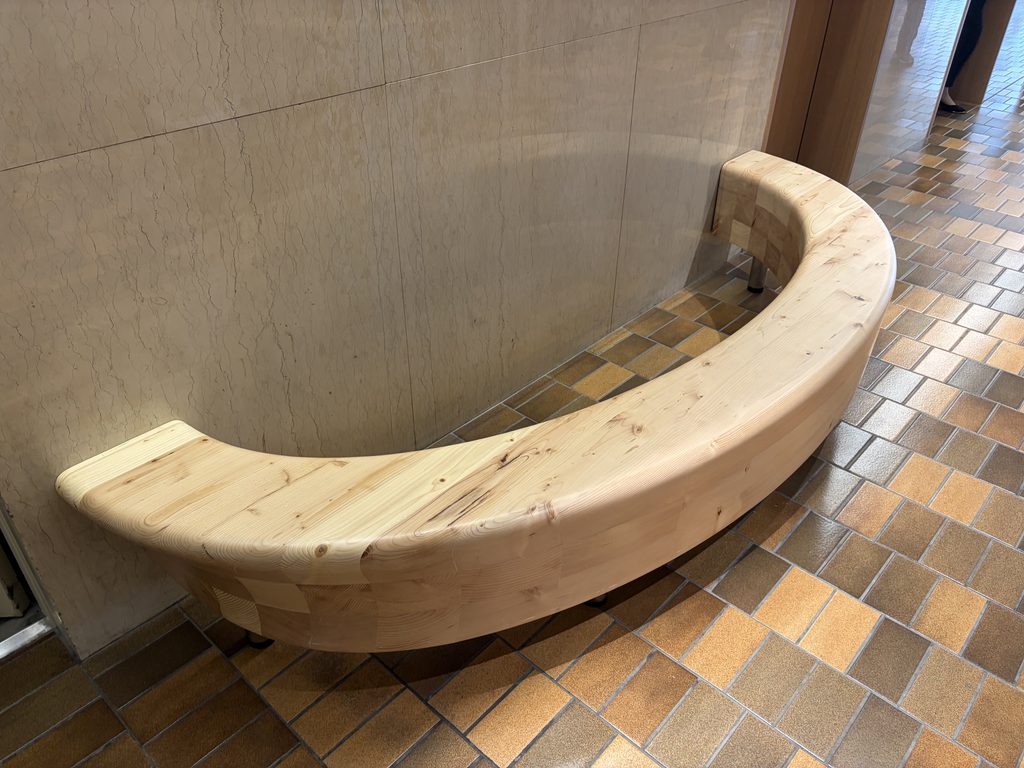
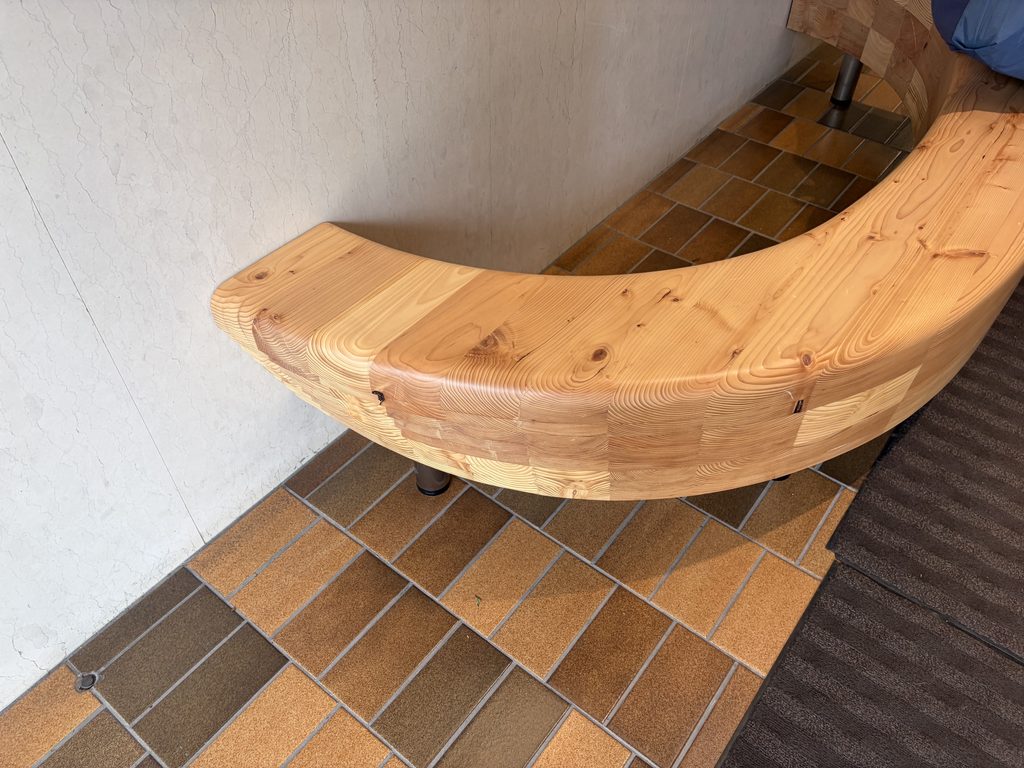
Canada Wood recently visited the renovated space, where sculptural benches, ceiling features and decorative wall panels give visitors a fresh perspective on a familiar construction material. For Yokohama Lumber, the project also demonstrates how traditional structural lumber can be developed into higher-value products for interior design.
The company specializes in importing and distributing wood from North America and Europe. Its relationship with Canadian suppliers dates back to its first direct Canadian lumber trade in 1925. Today, much of its Canadian supply comes from coastal British Columbia, particularly Hem-Fir and Douglas Fir for structural applications.
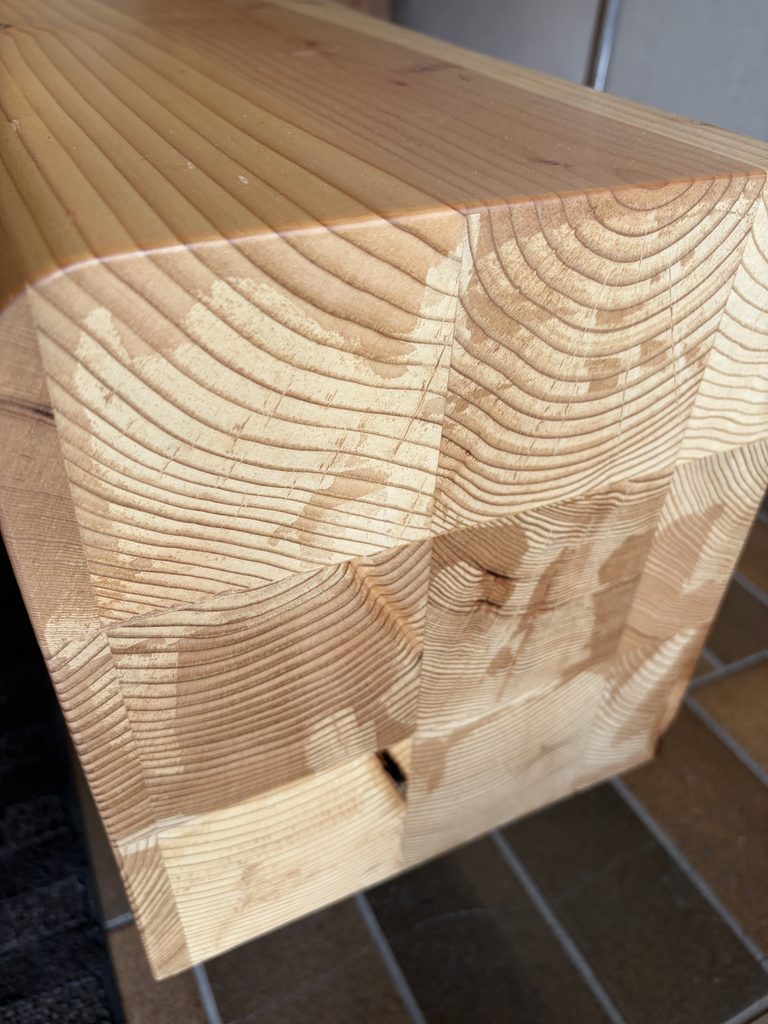
That long experience provided the starting point for the renovation. In modern Japanese homes, structural lumber is usually concealed behind walls and ceilings, leaving few opportunities to see or touch it. Yokohama Lumber wanted to bring the material into view, allowing visitors to appreciate its grain, knots and texture firsthand. The growing use of wood in non-residential construction gave the company another reason to explore new applications.
To develop the concept, Yokohama Lumber commissioned a Tokyo-based design firm specializing in retail interiors. A wood-processing specialist in Kasugai City, Aichi Prefecture, contributed the technical expertise needed to turn the design into finished pieces.
The project used Highline Western Hemlock 105 mm squares. The lumber was machined to 90 mm squares, laminated into blocks and shaped using CNC machining to create benches and sculptural features with sweeping S-shaped curves. Matching elements were installed on the ceiling. Thin slices from the 90 mm square offcuts were repurposed as decorative wall panels, extending the use of the material throughout the entrance.
The work required the company to look beyond the dimensions and performance characteristics that normally guide its structural lumber business. Grain, texture and shape became central to the product’s value. As the project progressed, staff noted that Canadian Western Hemlock offered a richness of visual expression they had not previously recognized.
The entrance now serves as a showcase for Yokohama Lumber’s “Roots” series of interior wood products. Building on the experience, the company plans to continue working with the design firm to develop a broader range of products made from kiln-dried Canadian Western Hemlock.
This project offers a practical example of how a long-established lumber business can connect its supply expertise with design and specialized processing to create new value. For Canadian Hem-Fir in Japan, it points to opportunities beyond traditional structural uses—in furniture, decorative features and welcoming commercial interiors where the wood itself becomes part of the experience.