

Supporting Future Wood Construction Through Timber Education in China

Building long-term demand for wood construction requires more than promoting individual projects. It also depends on developing the next generation of architects, engineers, and educators who understand modern timber systems and can apply them in practice.
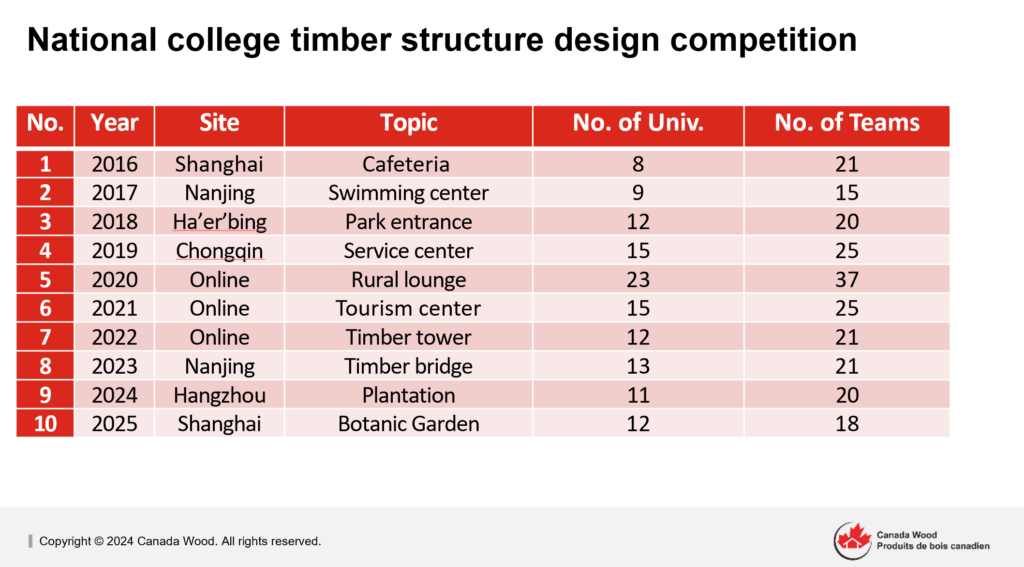
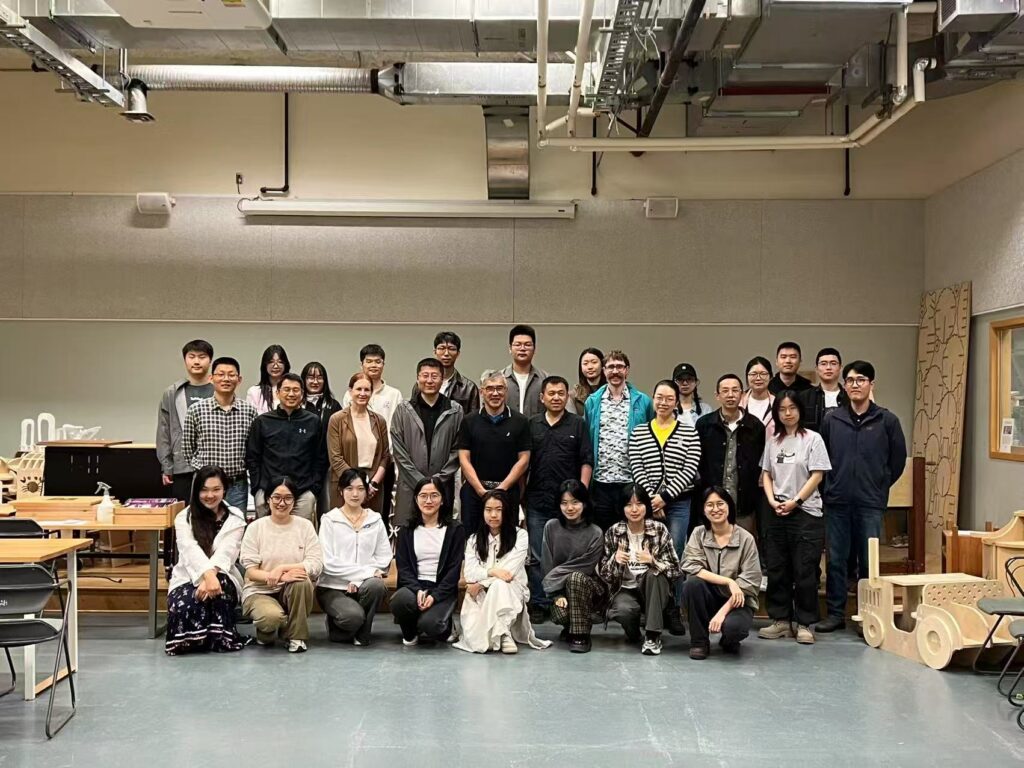
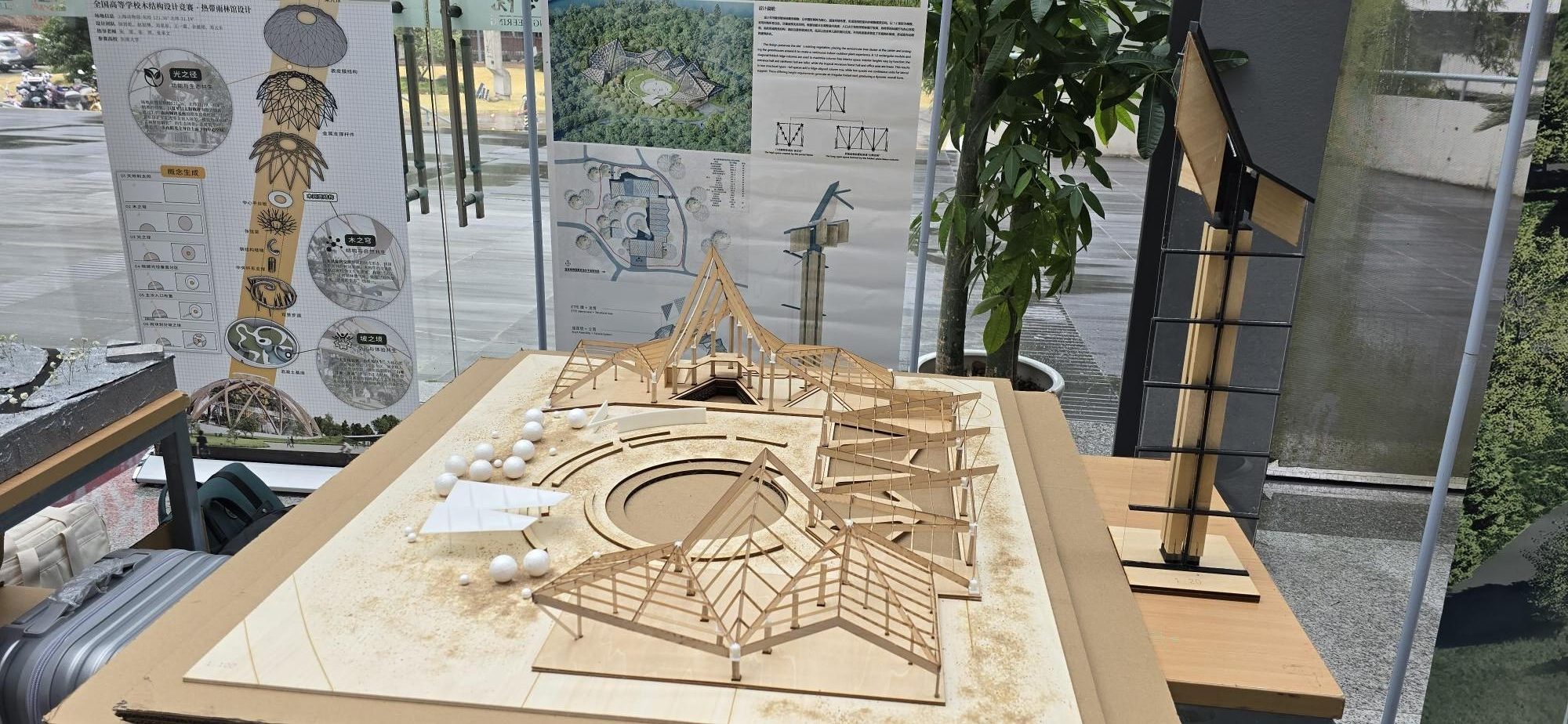
In China, Canada Wood has supported this through ongoing engagement with universities, technical training, and the National University Timber Structure Design Competition. Since 2016, the competition has provided students with hands-on experience in designing with wood across a wide range of building types, including a wood café, public service station, community building, observation tower, bridge reconstruction project, rural planting facility, and greenhouse pavilion. The competition has also encouraged stronger collaboration between architecture and engineering students by requiring teams to work through design, structural, and constructability challenges together.
Another important outcome has been the way this work supports broader improvements in timber education. Universities are expanding course content to include modern wood systems such as glulam, LVL, CLT, and NLT, while also introducing more digital design tools, model-making, and practice-based learning. Students are gaining exposure to parametric design, structural analysis, and performance-based design approaches that are increasingly relevant to low-carbon construction. In one notable example, the first competition’s winning project, OTTO Café from Tongji University, was later built at the China-Canada Low Carbon Research Institute campus in Ningbo, demonstrating how student design work can translate into a built project.

For Canada Wood, education-based initiatives like this support a broader market development strategy. Alongside technical cooperation with universities and design institutes, they help build familiarity with wood systems among the young professionals who will influence future material choices and project direction. The same logic can be seen in other recent Canada Wood activities in China, including cooperation with Beijing Forestry University on training and program development, the UBC Timber Design Studio with Chinese universities, and design partnerships with major institutes such as ECADI.

As China continues to advance green building and low-carbon construction, this work helps lay the foundation for long-term opportunities for Canadian wood products by building technical understanding, professional confidence, and future demand.