

Wood-Based Off-Site Construction Gains Ground in Korea’s Public Rental Housing Market


A meaningful shift is underway in South Korea’s housing sector as factory-built, wood-based housing begins to move into public rental developments. What was once seen mainly as an emerging construction method is now gaining traction in a part of the market with real potential to influence future housing delivery.
At the center of this development is XiGEIST, a subsidiary of GS E&C, one of Korea’s largest construction companies. Founded in 2020, XiGEIST focuses on modular and prefabricated wood-frame housing and has become an important player in advancing off-site construction in Korea.
Interest in the company’s work was on display during the 2025 British Columbia forestry trade mission to South Korea, when a Canadian delegation visited XiGEIST’s production facility. The visit offered a close look at the company’s manufacturing systems and its growing production capacity, which already supports several hundred housing units annually, with plans for further expansion.
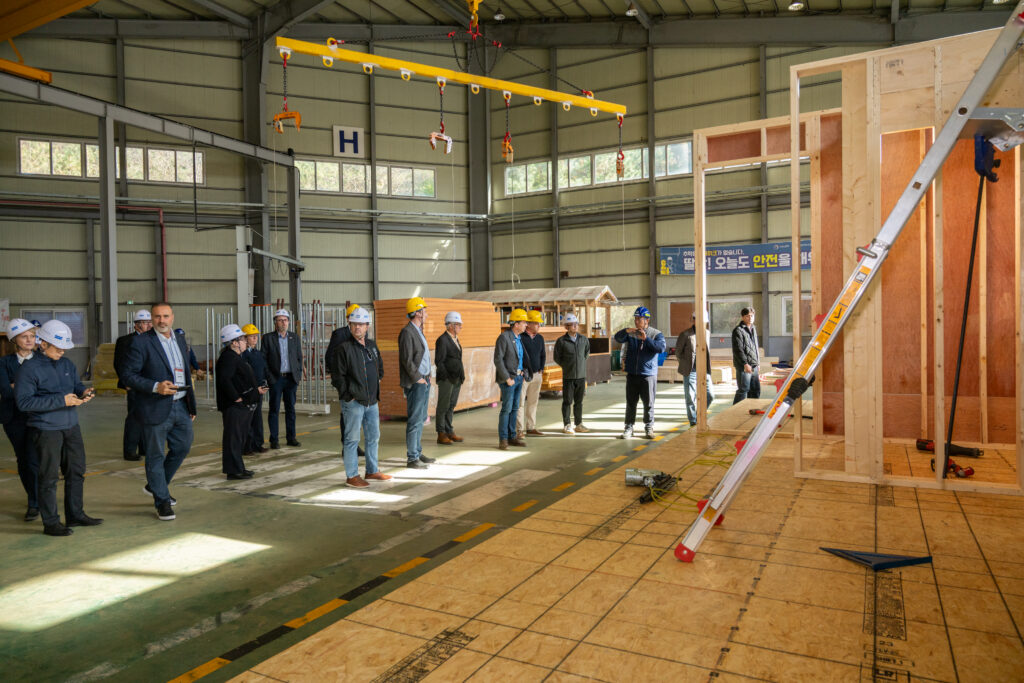
Since that trade mission, XiGEIST has continued to build momentum. One of the most notable recent examples is its involvement in public rental housing developments in Chungcheongnam-do Province. The company contributed to projects in Gongju and Buyeo that together delivered 39 prefabricated public rental homes using off-site construction methods. The Gongju development includes 19 units, while the Buyeo project includes 20. Each home offers about 84 square metres of living space along with a private outdoor yard of roughly 40 square metres.
The broader purpose of the initiative is especially important. Led by Chungcheongnam-do Province, the rural public housing program is designed to help address population decline by attracting young people and newly married couples to rural communities. Housing is being used here not just as shelter, but as part of a larger strategy for regional renewal.
That makes the use of wood-based off-site construction especially significant. It shows how prefabricated housing can align with public-sector goals around speed, quality, and rural livability, while also expanding the role of wood construction in Korea’s built environment. The projects have already drawn growing attention from local governments across the country, suggesting that this model may influence future public housing and public building programs.